
Thank you for reading this post, don't forget to subscribe!
For decades, Kenya has been seen as a beacon of stability and democracy in East Africa—a safe haven for political dissidents fleeing persecution and a trusted mediator in regional conflicts. However, over the past decade, cracks have emerged in this image. Kenya’s actions have increasingly revealed a troubling duality: while offering sanctuary to some dissidents, it has also collaborated with authoritarian regimes to abduct and deport others. Internally, the government has resorted to repressive measures against its own citizens, silencing critics through abductions and forced disappearances.
This duality came into sharp focus last this week when Kenya hosted Sudan’s Rapid Support Forces (RSF), a paramilitary group accused of genocide and war crimes, at Nairobi’s Kenyatta International Convention Centre (KICC). The move has drawn widespread condemnation and exposed the country’s fractured foreign policy. As Kenya contends with mounting criticism both locally and internationally, questions arise: Is Kenya still a champion of democracy and human rights, or is it becoming a transactional state that prioritizes political expediency over principles?
Kenya has long been regarded as a refuge for political dissidents across Africa. In 2017, Tanzanian opposition leader Tundu Lissu was flown to Nairobi for life-saving medical treatment after surviving an assassination attempt in Dodoma. Lissu had been shot 16 times in what he described as a politically motivated attack. Nairobi Hospital became his sanctuary as he recovered over four months, highlighting Kenya’s role as a protector of those fleeing persecution.
However, this legacy of protection has been undermined by a growing trend of transnational repression. In October 2024, four Turkish nationals—Alpaslan Tasci, Mustafa Genc, Huseyin Yesilsa, and Ozturk Uzun—were abducted in Nairobi and deported to Turkey at the request of Ankara. These individuals were recognized as refugees by the United Nations and were protected under international law. Yet Kenyan authorities ignored court orders prohibiting their deportation and handed them over to Turkish intelligence agents. This blatant violation of the non-refoulement principle, which forbids returning refugees to countries where they face persecution, drew sharp criticism from human rights organizations.
The case echoed an earlier incident involving Kurdish leader Abdullah Ocalan in 1999. Ocalan, founder of the Kurdistan Workers’ Party (PKK), was captured in Nairobi through a joint operation involving Turkish intelligence and Kenyan security forces. Despite seeking asylum in Kenya, Ocalan was extradited to Turkey, where he remains imprisoned. These cases reveal a troubling pattern: while Kenya has offered sanctuary to some dissidents, it has also collaborated with foreign governments to target others when politically convenient.
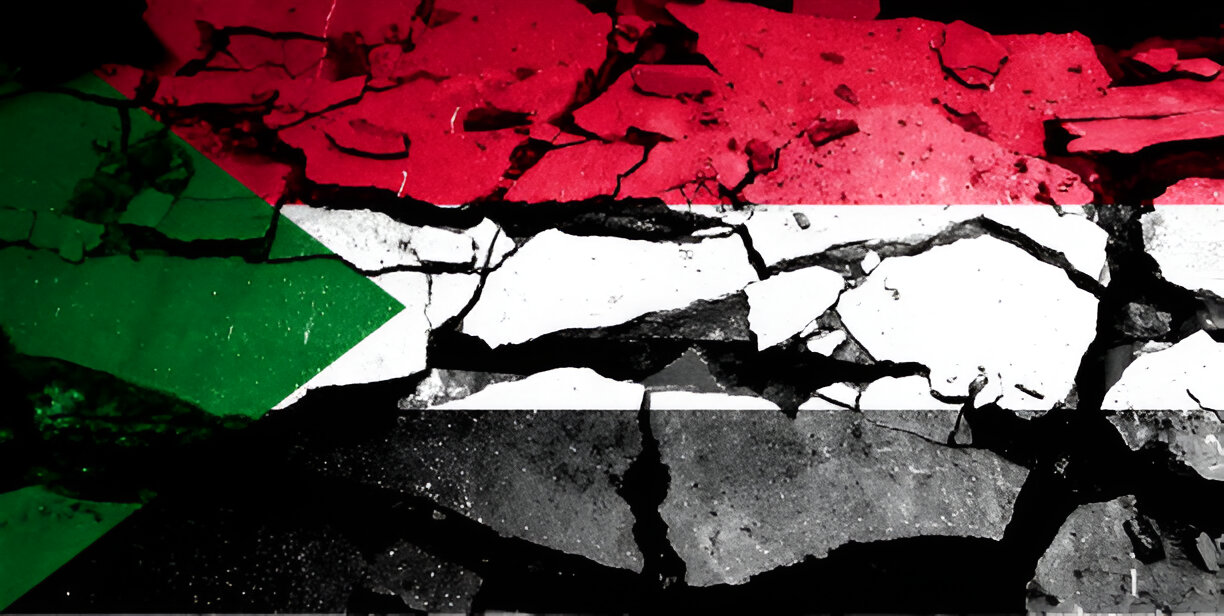
The decision to host Sudan’s RSF at KICC marked a new low for Kenya’s foreign policy. The RSF is accused of committing atrocities during Sudan’s ongoing civil war, including ethnic cleansing in Darfur and mass killings of civilians. Despite these allegations, RSF leaders were welcomed in Nairobi to negotiate what they called a “Political Charter for the Government of Peace and Unity.” The meeting has been widely condemned as an attempt by the RSF to establish a parallel government in Sudan.
Sudan’s military-led government has responded with fury, accusing Kenya of endorsing terrorism and threatening African unity. Sudanese Foreign Minister Hussein Awad issued a statement condemning Kenya for hosting “a terrorist Janjaweed militia” responsible for genocide. In retaliation, Sudan banned Kenyan tea imports—a significant blow to an industry that contributes US$1.2 billion annually to Kenya’s economy—and called for sanctions against Nairobi at the African Union (AU). The AU subsequently stripped Kenya of its role as mediator in Sudan’s conflict, further tarnishing its reputation as a regional peacemaker.
The fallout extended beyond Africa. U.S. Senator Chris Coons warned that Washington might reconsider its US$400 million annual security partnership with Kenya if it continued engaging with groups like the RSF. Meanwhile, European Union diplomats expressed concerns about Kenya’s alignment with sanctioned entities, further isolating the country on the global stage.
Kenya’s complicity in transnational repression extends beyond Sudan and Turkey. In November 2024, Ugandan opposition leader Kizza Besigye was abducted from an apartment in Nairobi by hooded men believed to be working with Uganda’s Chieftaincy of Military Intelligence (CMI). Besigye had sought refuge in Kenya after facing relentless persecution in Uganda for opposing President Yoweri Museveni’s regime. Despite court orders blocking his deportation, Besigye was handed over to Ugandan authorities and later appeared before a military court in Kampala—a civilian tried unlawfully under military jurisdiction.
This was not an isolated incident. In 2021, Nigerian separatist leader Nnamdi Kanu was arrested at Jomo Kenyatta International Airport under murky circumstances before being extradited to Abuja to face treason charges. Similarly, Rwandan human rights advocate Yusuf Ahmed Gasana disappeared from Nairobi in 2023 after criticizing President Paul Kagame’s government. Reports suggest that Kenyan authorities collaborated with Rwandan intelligence agents in Gasana’s disappearance—a claim that has fueled fears among exiled Rwandan dissidents living in Kenya.
These cases highlight how Kenyan security agencies have become enablers of authoritarian regimes across Africa and beyond. The pattern of collaboration with foreign governments to target dissidents raises serious questions about Kenya’s commitment to human rights and its role as a regional leader. It also undermines the country’s sovereignty, as security forces appear to be acting at the behest of foreign powers rather than in the interests of Kenyan citizens or in accordance with international law.
While enabling transnational repression abroad, Kenya has intensified its crackdown on domestic dissent under President William Ruto’s administration. Since June 2024 protests against tax hikes and rising living costs, at least 82 activists have been forcibly disappeared or abducted by unknown assailants believed to be state operatives. This alarming trend has created a climate of fear among civil society organizations, journalists, and ordinary citizens who dare to criticize government policies. The victims of these abductions come from various backgrounds, but they share a common trait: vocal opposition to the government.
These tactics echo past abuses under previous administrations, suggesting a disturbing continuity in the use of extrajudicial methods to silence dissent. During Uhuru Kenyatta’s presidency (2013–2022), lawyer Willie Kimani was abducted and murdered after exposing police executions—a case that shocked the nation but failed to deter similar crimes. The roots of such practices can be traced back even further to Daniel Moi’s regime (1978–2002), which routinely disappeared critics.
Kenya’s actions are not without cost. The country is already facing significant economic fallout from its diplomatic missteps and human rights abuses. The tourism sector, a crucial source of foreign exchange, has taken a hit with international bookings falling by 12% in late 2024. Foreign aid, which Kenya relies on for development projects, has also been affected. Germany froze €58 million in climate funding due to concerns over human rights abuses, signaling that other donors may follow suit if the situation does not improve.
Trade relations have suffered as well. Sudan’s ban on Kenyan tea imports is expected to cost US$120 million annually, exacerbating Kenya’s trade deficit and putting pressure on small-scale farmers who depend on tea exports for their livelihoods. The cumulative effect of these economic pressures has contributed to a weakening of the Kenyan shilling, amid investor jitters about the country’s political stability and economic management.
Kenya stands at a crossroads between reclaiming its legacy as East Africa’s democratic leader or descending further into lawlessness that undermines its sovereignty and global standing. Hosting groups like the RSF while silencing critics at home sends mixed signals about Kenya’s commitment to human rights and rule of law. The time for decisive action is now—not just for the sake of international credibility but for the future of democracy within our borders.
As exiled Tanzanian activist Maria Sarungi Tsehai aptly put it: “If Kenya falls, where will Africa’s oppressed find refuge?” This question encapsulates the gravity of Kenya’s current trajectory. The country’s actions not only affect its own citizens but have far-reaching implications for regional stability and the hopes of pro-democracy movements across Africa. Kenya must choose whether it will be remembered as a beacon of freedom or as a cautionary tale of how quickly hard-won democratic gains can be eroded.
The path forward requires courage, commitment, and a collective effort from government, civil society, and citizens alike. By addressing its contradictions head-on and recommitting to the principles of human rights and democratic governance, Kenya can still reclaim its role as a regional leader and a true sanctuary for those fleeing oppression. The alternative—continuing down the path of repression and international isolation—is too costly to contemplate, not just for Kenya but for the entire continent.
