
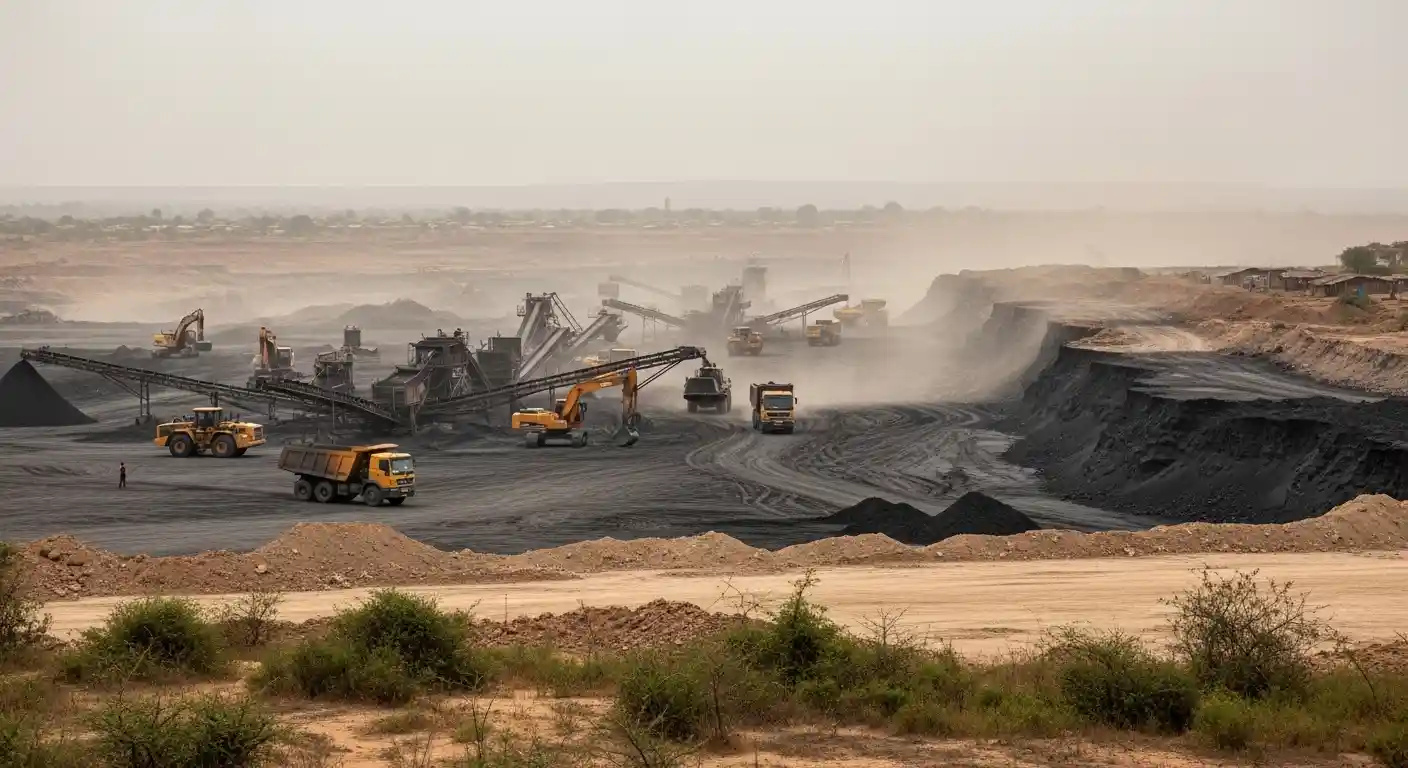
The Trouble with Coal Mining in Kenya
Kenya’s pursuit of coal mining has become a saga of missed opportunities, legal battles, broken partnerships, and a policy crossroads whose outcome may shape the country’s energy and economic future for decades. Despite tantalizing coal reserves and promised investments, the sector remains mired in red tape, disputes, and shifting priorities. For business leaders, investors, and policymakers, the coal conundrum stands as both a cautionary tale and a window into the country’s evolving relationship with extractives.
Thank you for reading this post, don't forget to subscribe!A Dream Deferred
More than a decade ago, coal was poised to become a centerpiece of Kenya’s Vision 2030. With the discovery of substantial deposits in the Mui Basin of Kitui County, and promising finds in Kwale, Kilifi, and Tana River, the narrative seemed clear: coal mining would power Kenya’s burgeoning economy, drive industrialization, and forge new sources of revenue in regions long starved of development.
Central to this vision were multi-billion shilling concessions—the “C and D” blocks handed to China’s Fenxi Mining Industry in partnership with Kenya’s Great Lakes Corporation, and the “A and B” blocks awarded to a consortium led by HCIG Energy Investment Company and Liketh Investments Kenya. By 2013, the government had inked deals, environmental studies were underway, stakeholder forums held, and ambitious power plants planned.
Yet, as of late 2025, not a single ton of commercial coal has been extracted. Instead, the sector is dominated by boardroom battles, legal stalemates, and local opposition. Concessions languish in the licensing phase, haunted by questions of legitimacy and loss.
Bitter Partnerships and Legal Shenanigans
The collapse of Kenya’s flagship coal mining partnership—Fenxi Mining and Great Lakes Corporation—is a cautionary example of what can go wrong in the absence of clear regulatory guidance and genuine collaboration.
Fenxi Mining, chosen for its technical expertise and access to capital, was required to partner with a local firm. The local partner, fronted by prominent businessman Peter Munga through Great Lakes Corporation, was allotted a 30% stake. Trouble emerged immediately: while Fenxi paid its share of the mandatory concession fee, Great Lakes failed to deliver its portion. After years of promises and missed deadlines, Fenxi ejected Great Lakes, notifying authorities and proposing a new local partner.
But Great Lakes did not exit quietly. Leveraging political connections and bureaucratic access, the local firm continued to lobby for recognition and revive its stake—pitting government ministries against each other and forcing decisions deep into limbo. Fenxi, for its part, warned that further obstructions could trigger international arbitration under ICSID. This exposes Kenya to massive financial clawbacks should courts find that investors were unfairly treated or their contracts frustrated.
Elsewhere, HCIG’s planned development of blocks “A and B” stalled in similar fashion—paralyzed by slow government approvals, unfulfilled investment milestones, and wrangling over local employment and compensation. The government has threatened to revoke inactive coal permits. Yet redress remains entangled in litigation and administration.
Opportunity Cost of Delay
Kenya’s inability to transform coal concessions into operational ventures carries profound direct and indirect costs. Investors have committed billions of shillings in project design, stakeholder engagement, and early works, with nothing to show for it but sunk costs and deferred returns.
Had coal mining proceeded, Kenya could have earned substantial royalties, taxes, and fees, alongside new export channels and local job creation. Estimates from blocked projects suggest the government may have lost access to annual receipts in the hundreds of millions, including compensation schemes for displaced communities and local county budgets. Revenue shortfalls echo downstream, affecting schools, health centers, and infrastructure.
Indirect losses loom even larger: Kenya’s reputation as a mining destination is now invariably colored by the coal saga, discouraging global investors and shrinking access to development finance. The country is exposed to possible contractual penalties (“take-or-pay” agreements for power) and arbitration awards, which could cost billions in damages even if projects never break ground.
Financial and Legal Risks
With investors like Fenxi threatening arbitration, Kenya faces real and present legal risks. The government could be compelled to pay large settlements over breached contracts or regulatory changes that undermine project delivery. This risk is multiplied by delays in environmental licensing, revoked power purchase agreements, and failure to fulfill community compensation obligations.
Litigation between concessionaires, government officials, and communities creates a legal minefield. Ongoing community lawsuits—for instance, those sent to halt the Lamu power plant and demand broader consultation—have set important precedents, making future extractive projects more complicated and risk-prone.
Environmental and Social Concerns
On the ground, coal mining is deeply controversial. Environmentalists warn that mining could devastate local ecosystems, pollute water sources, and expose residents to toxic dust. The planned Lamu power plant—located near a UNESCO World Heritage site—was blocked by courts after public protests and environmental concerns, signaling that civil society is vigilant and organized.
Local communities fear displacement, loss of land, and inadequate compensation. Many residents argue that traditional livelihoods are threatened, with little prospect of meaningful long-term employment. The sector’s social license is fragile, and government efforts at mitigation have not assuaged fears.
Is the Government Really Keen?
On paper, Kenya’s government recognizes extractives as a “strategic sector.” Vision 2030 and the Mining Act 2016 both name coal as a key ingredient for industrial growth. However, the rhetoric is not matched by practical commitment. Since 2019, the government has focused reforms and new policies overwhelmingly on renewables, echoing global trends and donor priorities.
Officials occasionally vow to unlock coal projects and auction new blocks. But in practice, delays persist; administrative inertia is deep; and practical action to resolve bottlenecks lags far behind promises. The new National Energy Policy (2025–2034) only frames coal as a backup solution in case renewables fail, confirming the sector’s peripheral role.
Should Kenya Abandon Coal Mining?
The answer is increasingly, “perhaps.” Kenya commands abundant renewable resources—geothermal, hydro, and wind meet over 80% of current demand. Investments in solar and battery storage are accelerating, supported by international funds and standardized contracts. The cost of renewables is falling, and environmental risks are managed within global best practice.
Coal’s opportunity cost looks even greater when measured against the risks: financial exposure, potential liabilities, environmental damage, damaged reputations, and social unrest. Even without mining, Kenya’s energy sector is dynamic and resilient. The country could shift resources to competitive clean energy, diversify the economy, and build a future more attuned to sustainability and global market demands.
The Road Ahead
Kenya’s coal saga is unfinished—a story of ambition, struggle, and decision. Unlocking coal concessions would require untangling legal and administrative knots, dramatically improving community engagement, and securing environmental safety. Should the government recommit to coal, the financial and legal exposure is real; but so too is the chance to establish sound extractives governance. If not, the country should embrace its strengths in renewables while learning from coal’s trials. Either way, clarity and resolve are needed.
For Kenyan business, the trouble with coal mining is less about geology and resources, and more about trust, governance, and vision—a story that will be remembered, whichever path is chosen.
